Table of Contents
ToggleAs someone who’s worked with both business coaches and consultants throughout my entrepreneurial journey, I understand the confusion many business owners face when deciding between these two types of professionals. The business coach vs consultant debate isn’t just about semantics—it’s about choosing the right approach to unlock your business potential and address your specific challenges.
After investing over $50,000 in various coaching and consulting services across different businesses, I’ve experienced firsthand how each approach delivers unique value. Let me share what I’ve learned to help you make the right choice for your situation. For context on budgets and ROI, see How Much Does Business Coaching Cost.
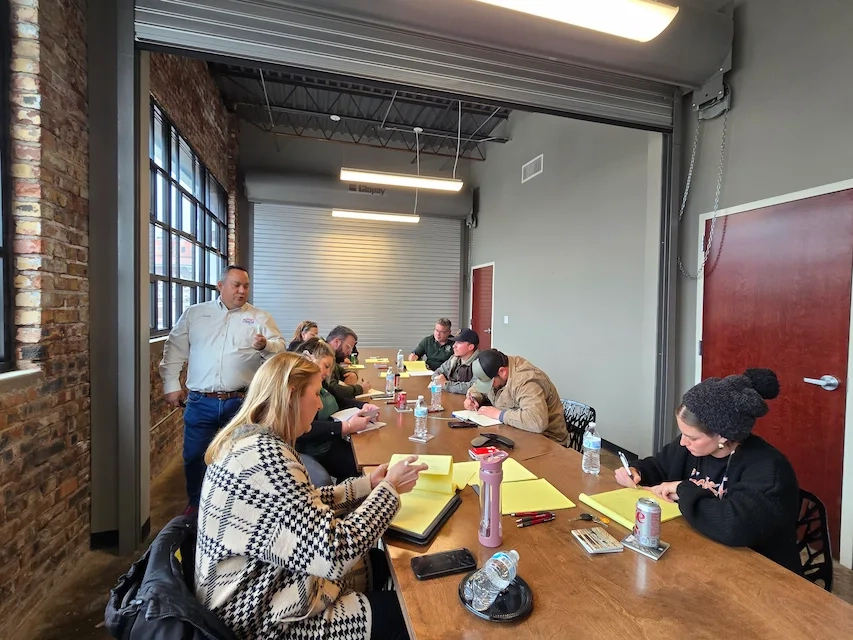
Business Coach vs Consultant: A professional coach standing by a large wooden table as participants jot notes on yellow notepads in an industrial-style conference room.
Understanding the Core Difference: Business Coach vs Consultant
The fundamental distinction between a business coach and consultant lies in their approach to problem-solving. A business coach takes the approach of improving you as the leader of your business. A business consultant takes a more specialized hands-on approach, providing specific solutions for your business itself.
When I first hired a business coach three years ago, I expected them to tell me exactly what to do. Instead, they asked powerful questions that helped me discover solutions myself. This experience taught me that coaches focus on developing your capabilities as a leader, while consultants provide expertise and direct solutions. If you’re weighing models and pricing, compare with How Much Does a Business Coach Charge.
How Business Coaches Transform Your Leadership
Business coaches work primarily on personal development and leadership growth. Coaching works on YOU as the business owner: planning, time management, alignment of goals with values, and where you might have blinders on.
- Identify limiting beliefs that hold back decision-making.
- Develop better time management systems (see Productivity Improvement).
- Align business goals with personal values (clarify Goals vs. Wishes).
- Recognize blind spots in leadership—reinforce with Leadership Masterclass and High-Performance Teams).
The coaching process is collaborative. Rather than being told what to do, I was guided to find my own answers through structured conversations and accountability. A short Strategy Session can help test fit and set expectations.
How Business Consultants Solve Specific Problems
Consultants bring specialized expertise to address specific business challenges. Business consultants are usually experts in a particular subject matter and give technical and professional advice to clients. Consulting mostly comes down to helping leaders solve business challenges and problems.
When I needed to restructure operations, a consultant:
- Analyzed current processes and identified inefficiencies.
- Recommended specific software solutions.
- Created implementation timelines and protocols.
- Provided hands-on support during the transition.
Consulting works on the business: operations, marketing, sales, team-building, designing offers, pricing—focusing on tangible outcomes. For structured improvement ideas, explore 10 Proven Strategies to Improve Performance and 6 Steps to a Better Business.
Key Differences in Approach: Coaching vs Consulting Methods
The Coaching Philosophy: Empowering Self-Discovery
Coaches leave room for clients to find their own answers. During my coaching sessions, I rarely received direct advice. Instead, my coach would ask questions like:
- “What options do you see here?”
- “What would success look like in this situation?”
- “What’s preventing you from moving forward?”
This methodology built critical thinking and confidence that I still use today. If you want a structured place to start, try the One-Page Strategic Plan Template (also in our Strategy Tools hub).
The Consulting Philosophy: Expert Solutions
Consultants assess problems and tell the client what the goal is and how to reach it. For marketing and sales execution, complementary programs like Sales Masterclass and Business Masterclass can operationalize the plan once defined.
- Audited our current marketing efforts
- Identified specific gaps and opportunities
- Provided a detailed strategy with actionable steps
- Recommended tools and tactics based on their expertise
When You Need a Business Coach: Identifying the Right Scenarios
Based on my experience, business coaching works best when you’re facing leadership development challenges, mindset blocks, or long-term strategy needs.
Leadership Development Challenges
- Making confident decisions, managing time, communicating with your team.
- Balancing work and personal life, setting and achieving meaningful goals.
A coach can help develop these skills through guided discovery and accountability. Consider a Strategy Session to scope priorities.
Personal Growth and Mindset Blocks
Coaching supports culture and team dynamics. I worked with a coach when perfectionism slowed my team. Through coaching, I learned to delegate effectively and trust capabilities—skills we reinforced via Team-Building Sessions.
Long-Term Business Vision and Strategy
Coaches excel at helping you:
- Clarify your long-term vision and align actions with values.
- Develop sustainable practices and accountability systems.
Map the plan with the One-Page Strategic Plan Template and 6 Steps.
When You Need a Business Consultant: Strategic Problem-Solving
Specific Technical Challenges
For CRM implementations, pricing restructures, digital marketing strategy, or supply-chain optimization, a consultant can deliver targeted expertise. Pair execution with Productivity Improvement methods.
Immediate Problem Resolution
When we faced a cash-flow crisis, a financial consultant delivered rapid diagnostics and recommendations. To build capabilities after the fix, I layered 6 Steps to a Better Business.
Specialized Expertise Requirements
Some challenges require deep industry knowledge without hiring full-time. Consultants bring this on demand; then you can continue learning through Group Programs or ActionCLUB.
Cost Considerations: Business Coach vs Consultant Pricing
Understanding the financial investment helps you decide. Review ranges and fee models in How Much Does Business Coaching Cost and related benchmarks in How Much Does a Business Coach Charge. When you’re ready, you can secure your spot or add a program to your cart.
Business Coaching Investment Ranges
Based on my experience and current market rates:
Entry-Level Coaches: $100-$300 per hour
- Newer coaches or those serving specific niches
- Often provide excellent value for small businesses
- My first coach charged $150/hour and delivered significant value
Mid-Range Coaches: $300-$600 per hour
- 5-10 years of experience with proven track records
- Specialized in certain business types or leadership challenges
- This range provided my best ROI for leadership development
Premium Coaches: $600+ per hour
- Elite coaches with extensive experience
- Often work with executives and high-growth companies
- Can include exclusive access to networks and resources
Business Consulting Fee Structures
Consulting costs vary significantly based on specialization:
General Business Consultants: $100-$500 per hour Specialized Consultants: $200-$1,000+ per hour Project-Based Fees: $5,000-$50,000+ depending on scope
Many consultants prefer project-based pricing, which I found more predictable for budgeting purposes.
ROI Expectations for Each Approach
Consulting ROI is often immediate and measurable: process improvements, cost savings, revenue lifts, and time savings. For quick wins on margin and cash flow, start with 5 Ways to Superprofits and the 10 Proven Strategies playbook.
- Specific process improvements
- Cost savings from operational efficiency
- Revenue increases from marketing strategies
- Time savings from system implementations
My marketing consultant delivered a 300% ROI within six months through improved conversion rates and customer acquisition strategies.
The Hybrid Approach: Combining Coaching and Consulting
Some professionals switch modes—coaching for leadership, consulting for technical problems, and strategic planning for long-term goals. If you need both, a Strategy Session helps design a blended roadmap.
- Coaching mode for leadership development discussions
- Consulting mode for technical problem-solving
- Strategic mode for long-term planning
This flexibility can be valuable if you have both personal development needs and specific business challenges.
Making the Right Choice: Assessment Framework
Your Learning Preference
If you learn best through discovery and reflection, coaching fits leadership development. If you want specific steps and implementation, consulting may work better. Explore a quick comparison in Business Coach vs Consultant (Guide).
Available Resources and Timeline
Coaching requires time and openness to change. Consulting delivers faster results but may not build internal capability. For a staged approach, review upcoming Small Business Seminars Near Me or book a Strategy Session.
Real-World Success Stories: Coach vs Consultant Impact
Coaching Success Story: Leadership Transformation
Working with my business coach for eight months resulted in:
- 40% improvement in team productivity through better delegation.
- Decision-making time reduced from days to hours.
- Improved work-life balance and confidence in strategic planning.
For regional insights and lessons learned, see What Really Works in North Louisiana.
Consulting Success Story: Operational Efficiency
A operations consultant helped us:
- Fulfillment time reduced by 50% through process optimization.
- Operational costs decreased by 25% via automation.
- Errors reduced by 80% with quality systems and SOPs.
These results were immediate and measurable, providing clear ROI within three months.
Industry-Specific Considerations for Business Coach vs Consultant
Technology Businesses
Coaching for leadership as teams scale; consulting for architecture and process optimization. Reinforce with Management Masterclass.
Service-Based Businesses
Coaching for client relationship management; consulting for systemization. Consider Team-Building and ServiceRICH.
Retail and E-commerce
Coaching for strategic thinking and stress management; consulting for marketing and inventory optimization—pair with Sales Masterclass.
Common Mistakes in Choosing Between Coach and Consultant
- Expecting Immediate Results from Coaching: Coaching builds capability over time—use One-Page Plans to anchor progress.
- Using Consultants for Long-Term Development: If root causes are leadership or culture, coaching may be more effective.
- Not Clarifying Expectations: Define outcomes, timelines, communication cadence, and success metrics up front (align in a Strategy Session).
The Future of Business Support: Evolving Roles
The lines between coach and consultant are blurring. Many now blend strategic consulting with implementation coaching, technical expertise with leadership development, and short-term fixes with long-term capability building. If you’re ready to explore options, Contact Us or browse the Shop for programs like Business Masterclass and ActionCLUB.
Frequently Asked Questions About Business Coach vs Consultant
Start by identifying your primary challenge. If you’re struggling with leadership, decision-making, or personal barriers to growth, coaching is likely the better choice. If you face specific technical problems or need specialized expertise you don’t have internally, consulting makes more sense. I recommend asking yourself: “Do I need to develop my capabilities, or do I need someone to solve a specific problem for me?”
Yes, and this can be highly effective. I’ve worked with both simultaneously when facing complex challenges that required both personal development and technical solutions. The key is ensuring clear communication about roles and avoiding overlap. Your coach might help you process and implement what you learn from consultants, while consultants provide the specialized knowledge your coach may not possess.
Coaching relationships typically last 6-12 months with weekly or bi-weekly sessions, requiring ongoing commitment to personal development work between sessions. Consulting engagements can range from a few weeks for specific projects to several months for complex implementations. Coaching requires more personal time investment, while consulting is more project-focused with defined deliverables and timelines.
Coaching costs tend to be more predictable with monthly retainers or session packages, typically ranging from $500-$5,000 per month depending on the coach’s experience. Consulting costs vary widely based on specialization and project scope, from $5,000 for small projects to $50,000+ for comprehensive initiatives. In my experience, coaching provides better long-term ROI, while consulting delivers more immediate, measurable returns.
For coaches, look for certifications from recognized organizations like the International Coach Federation (ICF), relevant business experience, and testimonials from clients with similar challenges. For consultants, prioritize industry expertise, proven track records in your specific challenge area, case studies, and technical qualifications relevant to your needs. I’ve found that results and references matter more than formal credentials for both roles.
Click to discover typical business coach fees and learn what drives the costs.