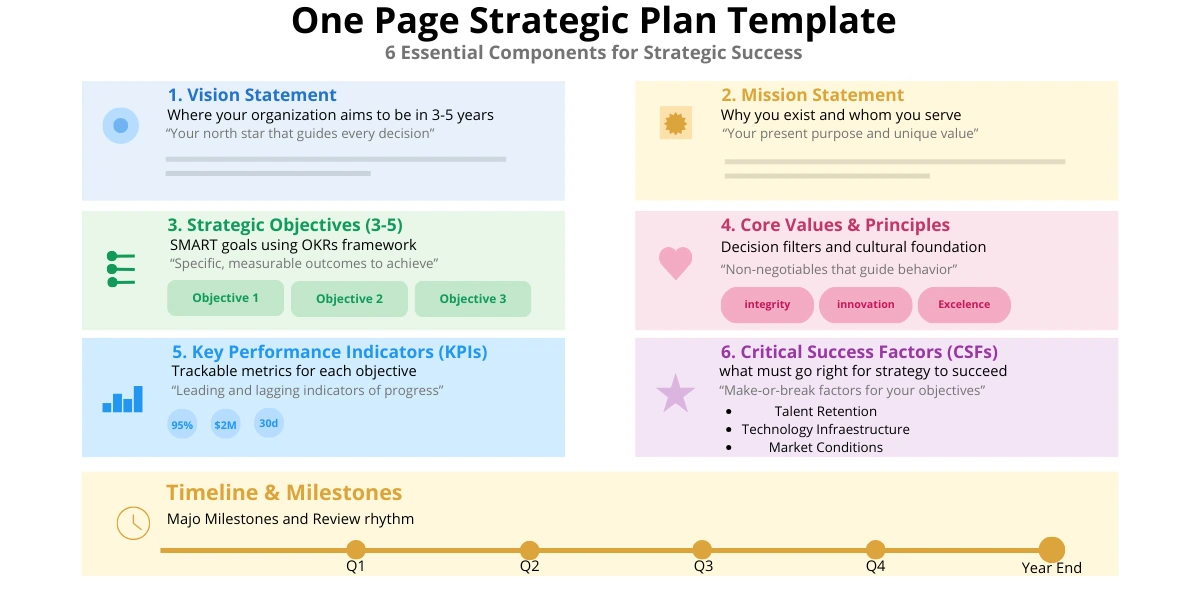
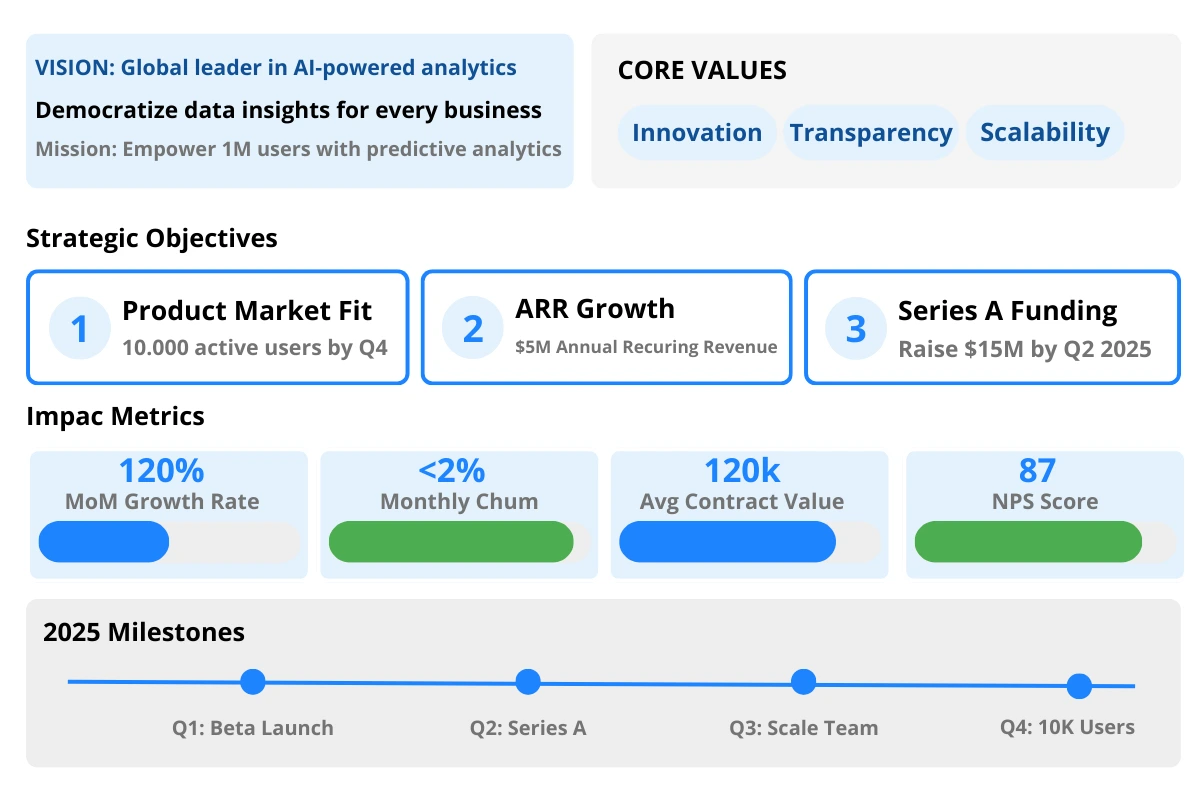
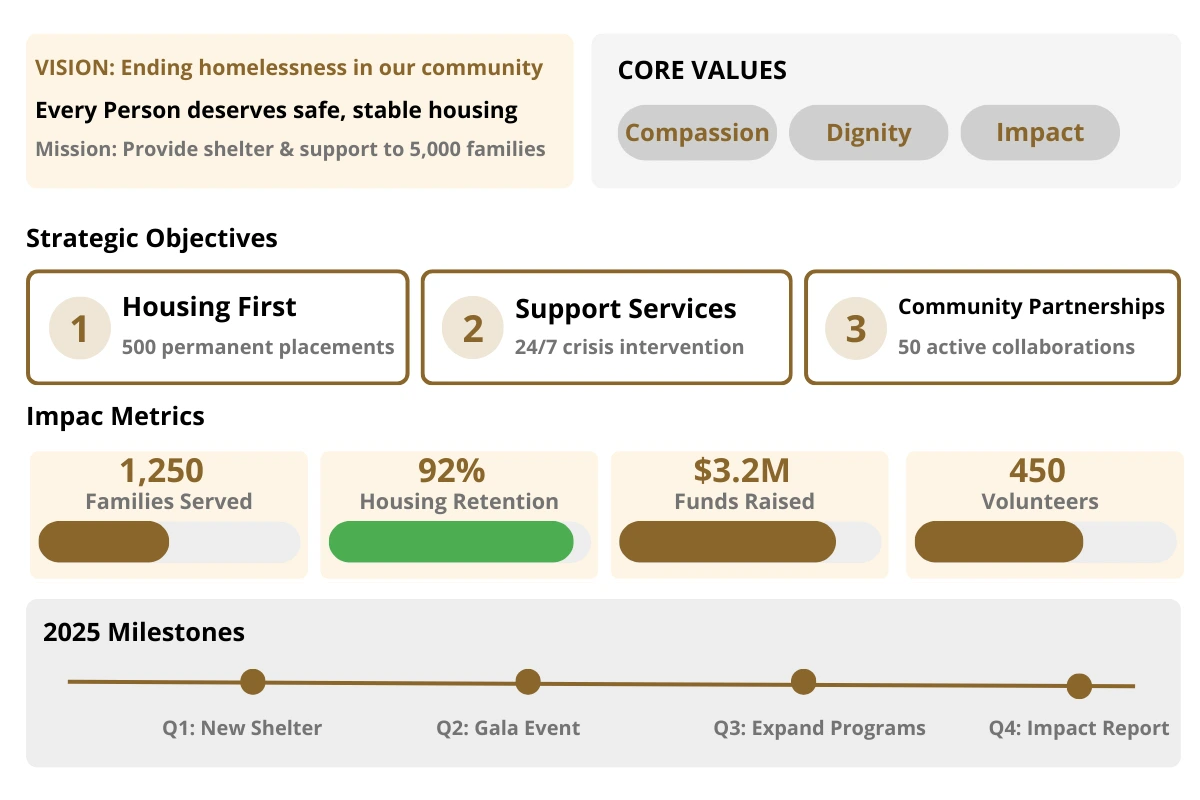
Your strategic plan on a page needs six essential elements working in harmony. First, your Vision Statement provides the north star—where your organization aims to be in 3-5 years. This isn't just aspirational language; it's a concrete destination that guides every decision.
Next, your Mission Statement clarifies why you exist and whom you serve. While vision looks forward, mission grounds you in present purpose. Southwest Airlines exemplifies this with their mission to "democratize the skies," which has guided every strategic decision from pricing to route selection for over 50 years.
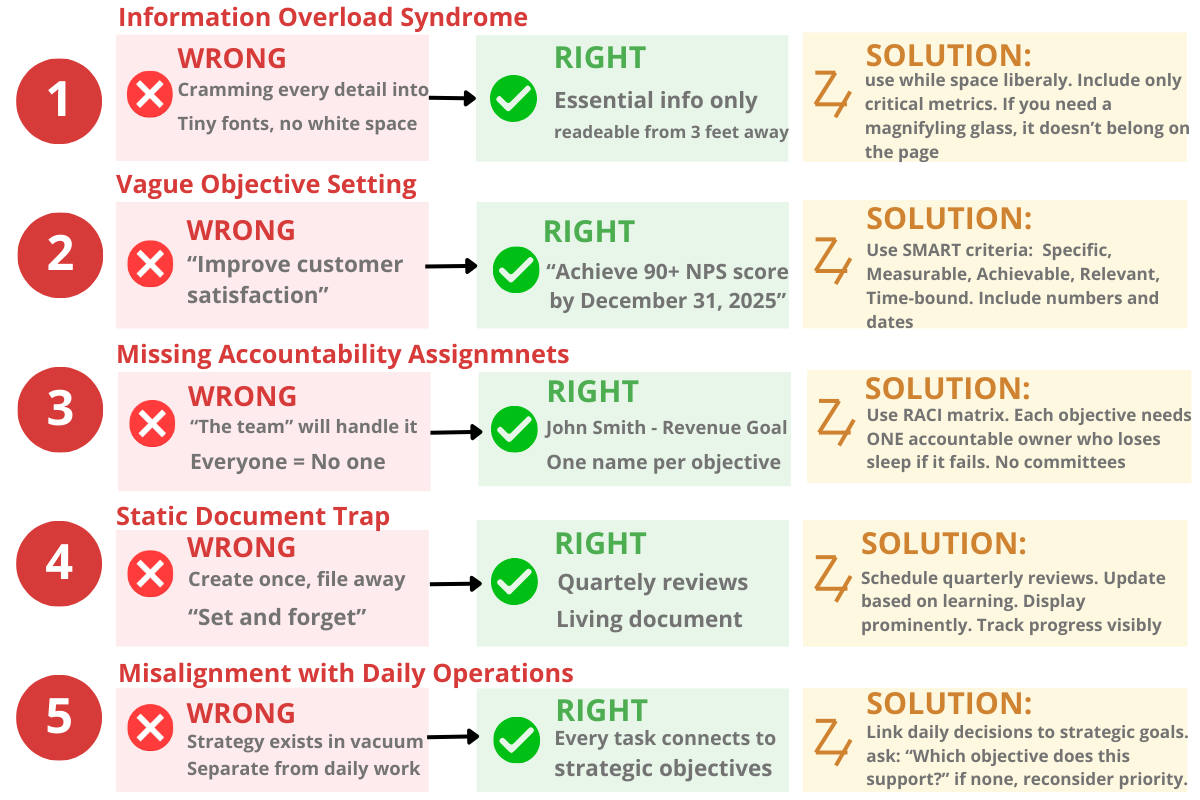
The heart of your plan consists of 3-5 Strategic Objectives using the OKRs (Objectives and Key Results) framework popularized by Intel and Google. These aren't vague intentions but specific, measurable outcomes. For instance, instead of "improve customer satisfaction," write "achieve 90+ Net Promoter Score by Q4 2025."
Your Core Values and Operating Principles serve as decision filters. Netflix's famous "Freedom and Responsibility" culture deck started as simple values on their one-page plan, eventually becoming the blueprint for one of the most innovative companies in entertainment.
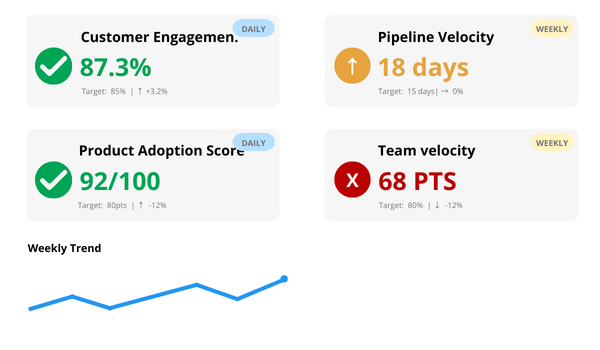
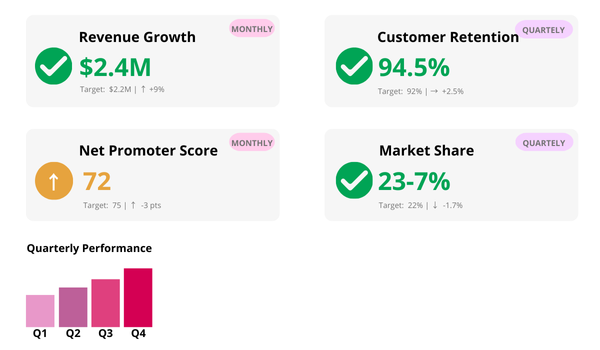
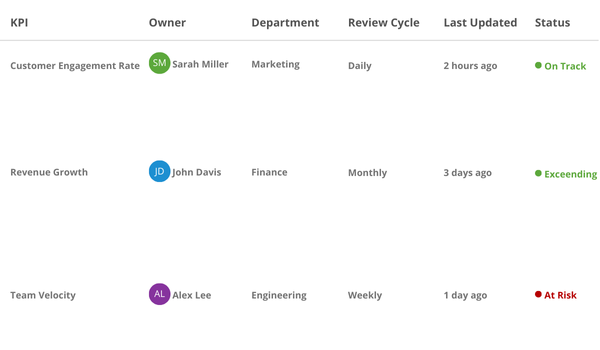
Key Performance Indicators (KPIs) transform objectives into trackable metrics. Each strategic objective needs 2-3 KPIs that indicate progress. Amazon's focus on customer acquisition cost, lifetime value, and repeat purchase rate—all visible on their internal one-page dashboards—drives their strategic decisions. To dive deeper into improving business performance with proven strategies, consider how these metrics align with your operational goals.
Finally, Critical Success Factors (CSFs) identify what must go right for strategy to succeed. These might include talent retention, technology infrastructure, or market conditions—factors that could make or break your strategic objectives.